

Edegem - Stolpersteine
Information: Wikipedia
A Stolperstein literally "stumbling stone", metaphorically a "stumbling block" is a sett-size, 10 by 10 centimetres (3.9 in × 3.9 in) concrete cube bearing a brass plate inscribed with the name and life dates of victims of Nazi extermination or persecution.
The Stolpersteine project, initiated by the German artist Gunter Demnig in 1992, aims to commemorate individuals at exactly the last place of residency—or, sometimes, work—which was freely chosen by the person before he or she fell victim to Nazi terror, euthanasia, eugenics, was deported to a concentration or extermination camp, or escaped persecution by emigration or suicide. As of 29 March 2018, over 67,000 Stolpersteine have been laid in 22 countries, making the Stolpersteine project the world's largest decentralized memorial.
The majority of Stolpersteine commemorate Jewish victims of the Holocaust. Others have been placed for Sinti and Romani people (then also called "gypsies"), homosexuals, the physically or mentally disabled, Jehovah's Witnesses, black people, members of the Communist Party, the Social Democratic Party, and the anti-Nazi Resistance, the Christian opposition (both Protestants and Catholics), and Freemasons, along with International Brigade soldiers in the Spanish Civil War, military deserters, conscientious objectors, escape helpers, capitulators, "habitual criminals", looters, and others charged with treason, military disobedience, or undermining the Nazi military, as well as Allied soldiers.
List of Stolpersteine in the town of Edegem
De Burletlaan 24: WILLY BECKERS
Koning Albertlei 20: JACOB SPLITTER
Lentelei 33: SOPHIE LEVY
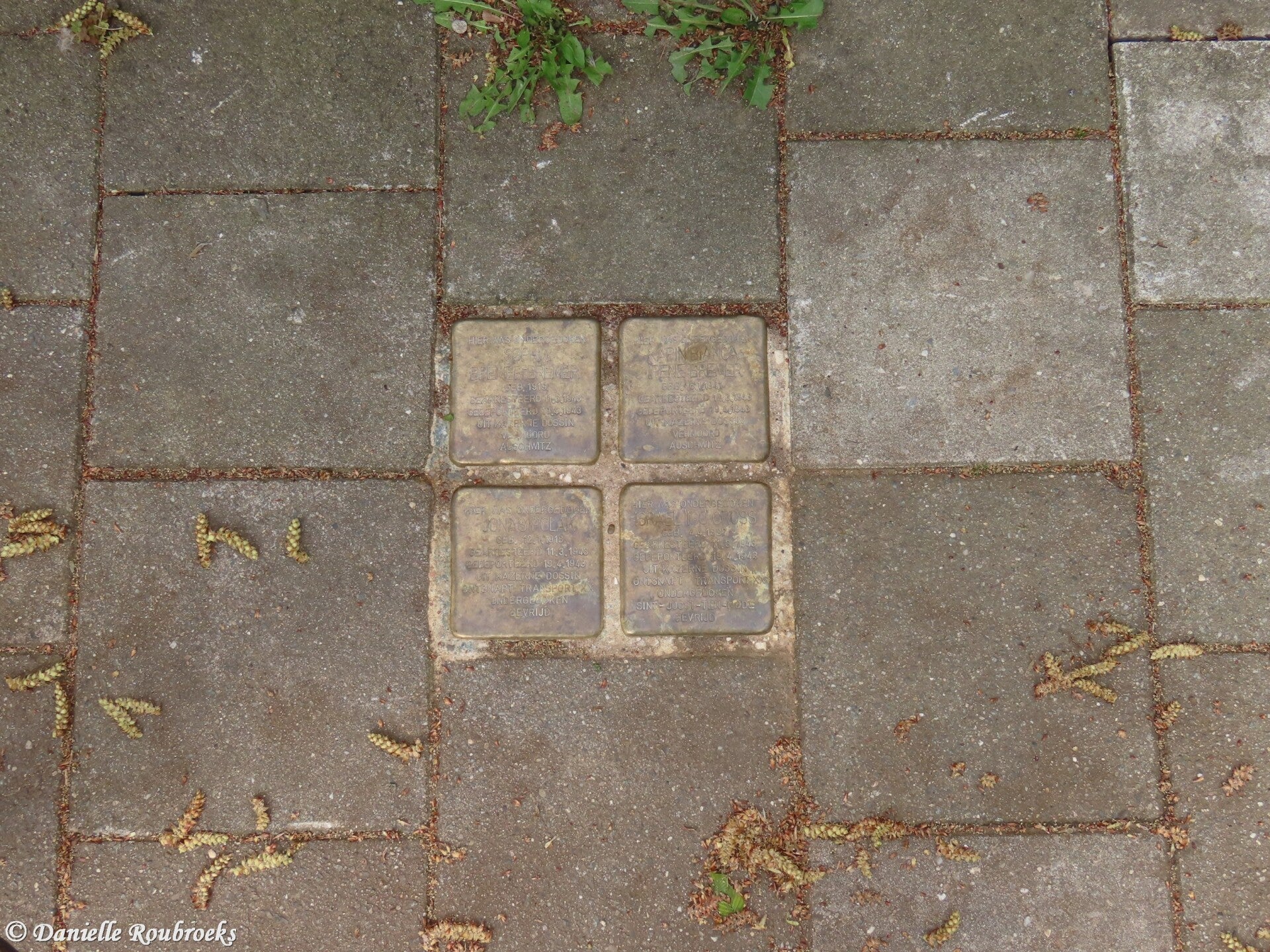
Lentelei 35: SOPHIA BREMER
KARIN BREMER
JONAS POLAK
ISRAEL GROSS
Mechelsesteenweg 424: JEAN HOTTLET
De Burletlaan 24
hier woonde
WILLY BECKERS
geb. 1925
verzetsstrijder
gearresteerd 27.6.1943
‘Nacht und Nebel’
vermoord 29.11.1944
gevangenis Graz-Karlau
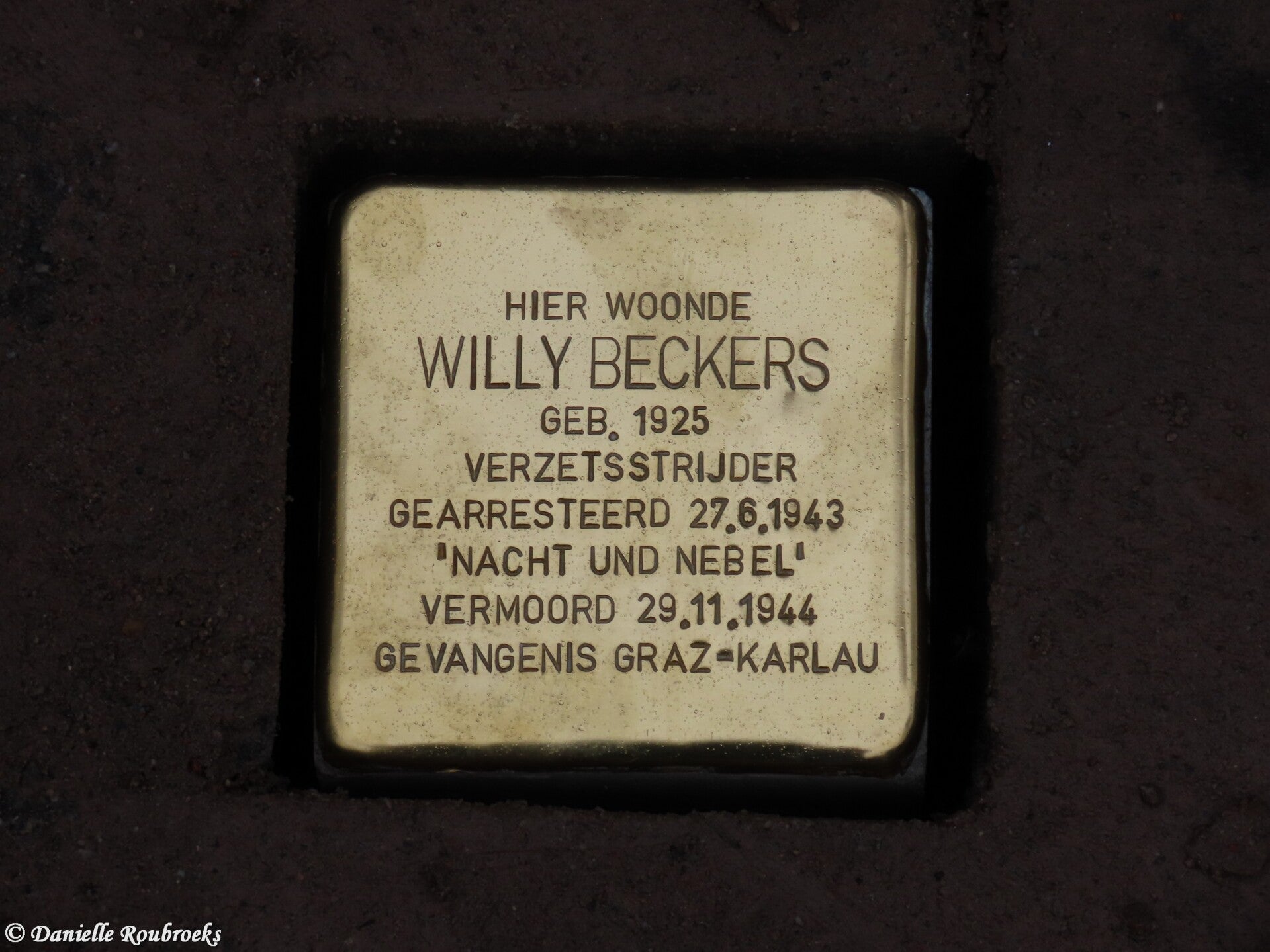
De Burletlaan 24
here lived
WILLY BECKERS
born 1925
resistance fighter
arrested 27.6.1943
‘Nacht und Nebel’
murdered 29.11.1944
prison Graz-Karlau
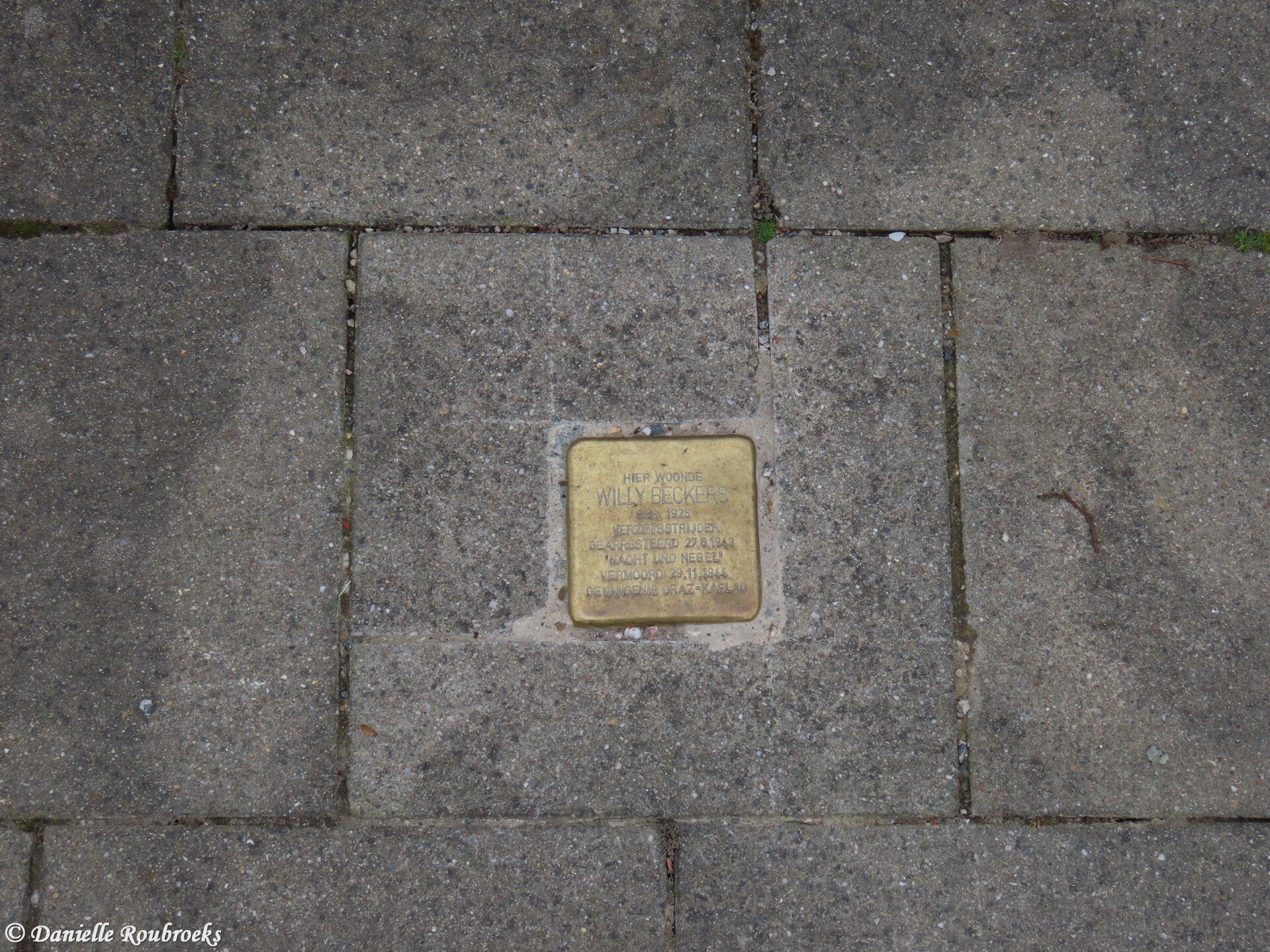
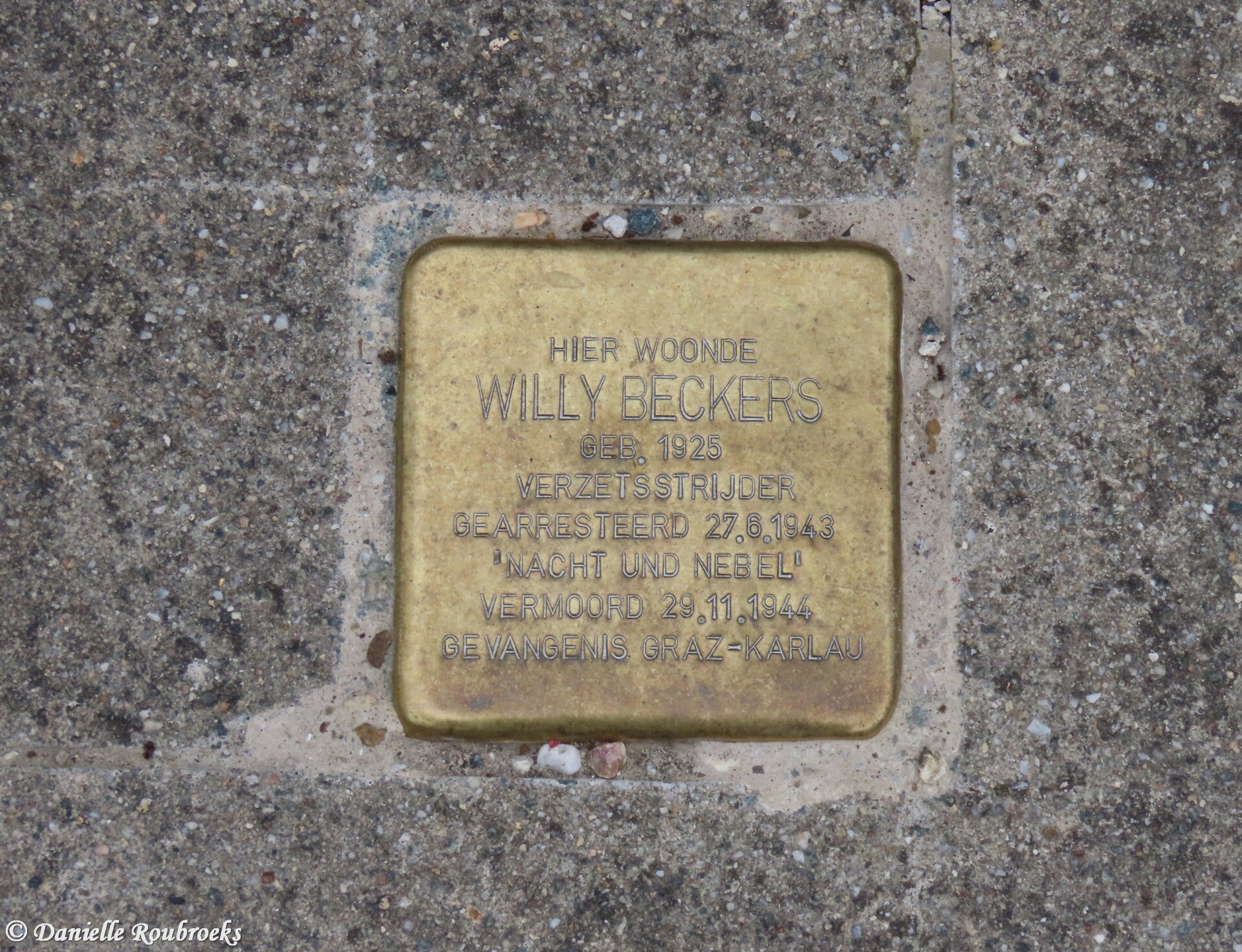
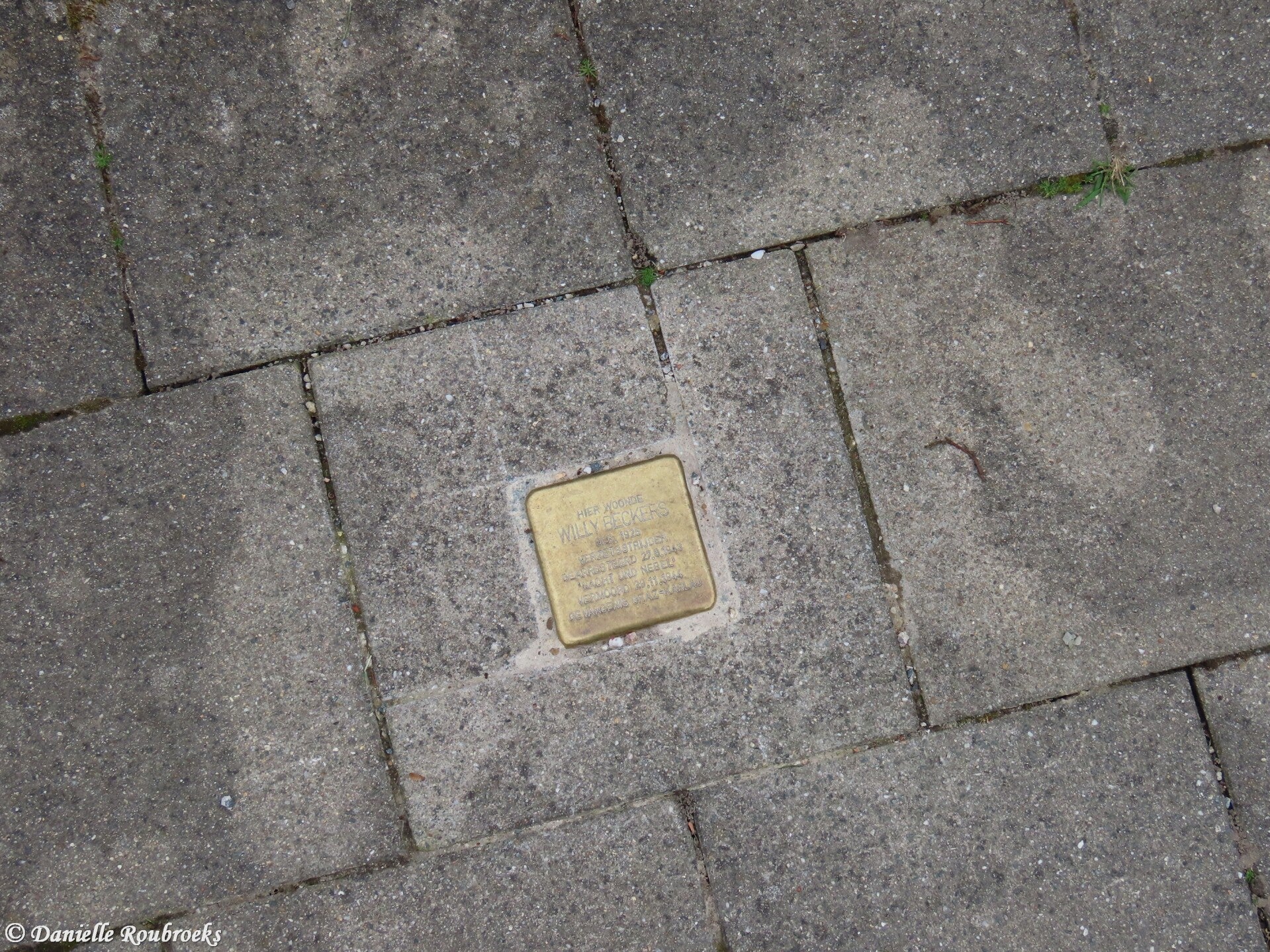
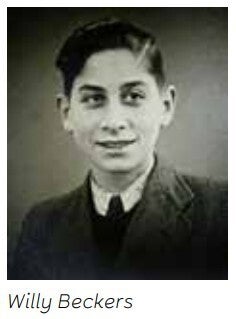
Willy Victor Marie Valentin Beckers, born on November 27, 1925, in Tienen, son of Carolus Beckers and Julia Stappers. He had two older sisters and an older brother. On June 6, 1929, the family moved to De Burletlaan 24 in Edegem. Willy was a student at the Sint-Jan Berchmans College when he became a member of the NKB in February 1942, for which he distributed clandestine pamphlets, among other things. In September 1942, he joined the Secret Army, where he primarily gathered intelligence.
On Sunday, June 27, 1943, Willy was arrested along with 22 other boys by the Sicherheitspolizei-SD (Sipo-SD) in a small gymnasium on Coebergerstraat. Under the guise of the KSA Sint-Norbertus gymnastics group, they were receiving drill training and marksmanship instruction there. They had been betrayed by a fellow student. On July 13, Willy was handed over to the Feldkommandantur (FK) 520, which ruled on August 17 that the conditions for trial in occupied territory had not been met. Willy ended up in the "Nacht und Nebel" concept and was transferred to Germany together with the other boys.
After stints in the Essen prison and the Esterwegen penal camp, Willy was sentenced to one and a half years in juvenile prison in Gross-Strehlitz on May 9, 1944. Via prisons in Prague and Brno, he ended up in the Karlau Prison in Graz in May. About six months later, on November 29, 1944, Willy Beckers died there as a result of “abdominal tuberculosis” and “heart weakness.” He was presumably buried in a mass grave at the Central Cemetery in Graz. It was not until late after the war that Willy’s parents learned that their son had passed away.
(Info: Guido Andries, NSB-Edegem)
Koning Albertlei 20
hier was ondergedoken
JACOB BER
SPLITTER
geb. 1873
overleden 20.1.1943
Edegem

Koning Albertlei 20
here was in hiding
JACOB BER
SPLITTER
born 1873
died 20.1.1943
Edegem
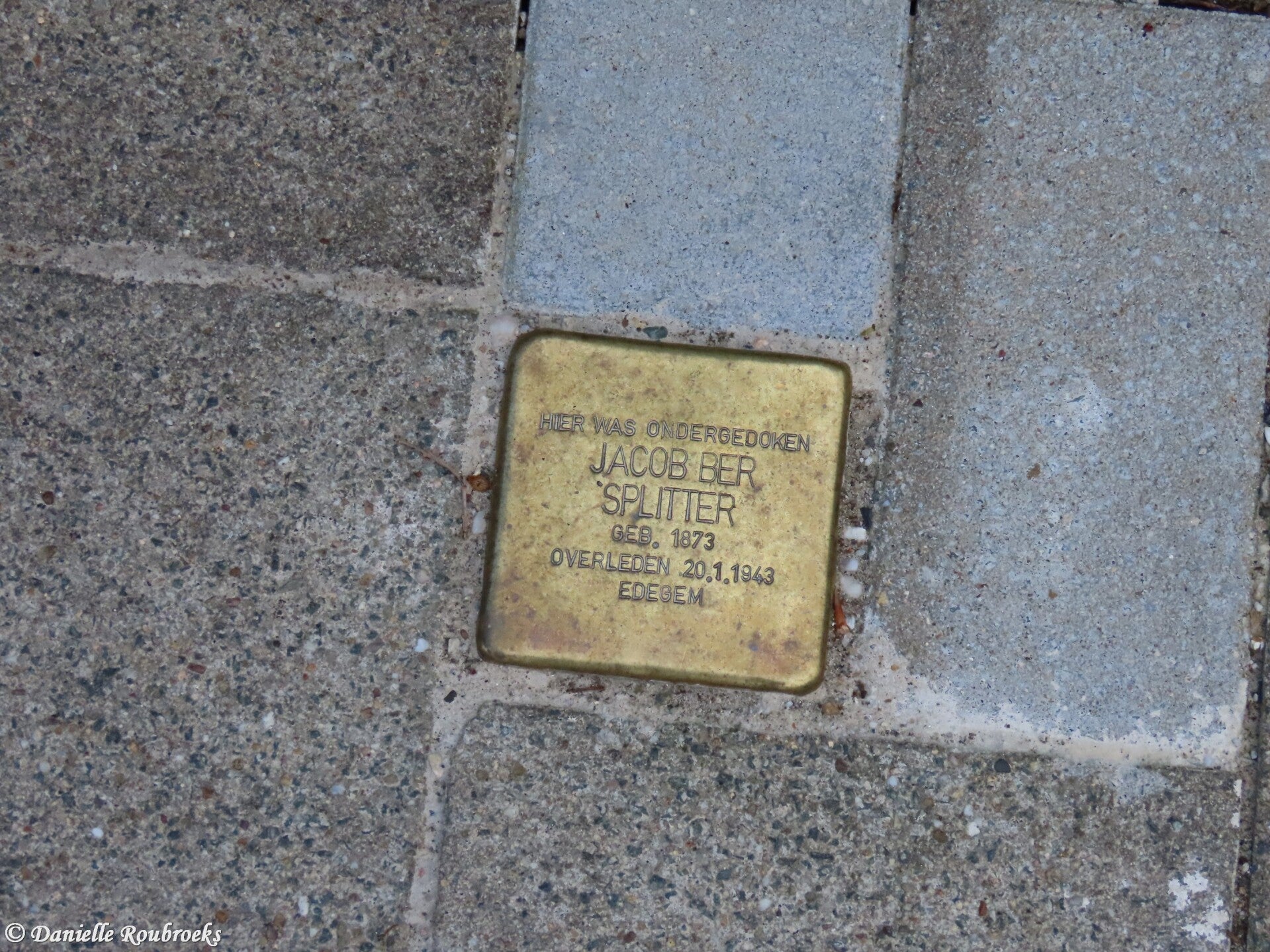
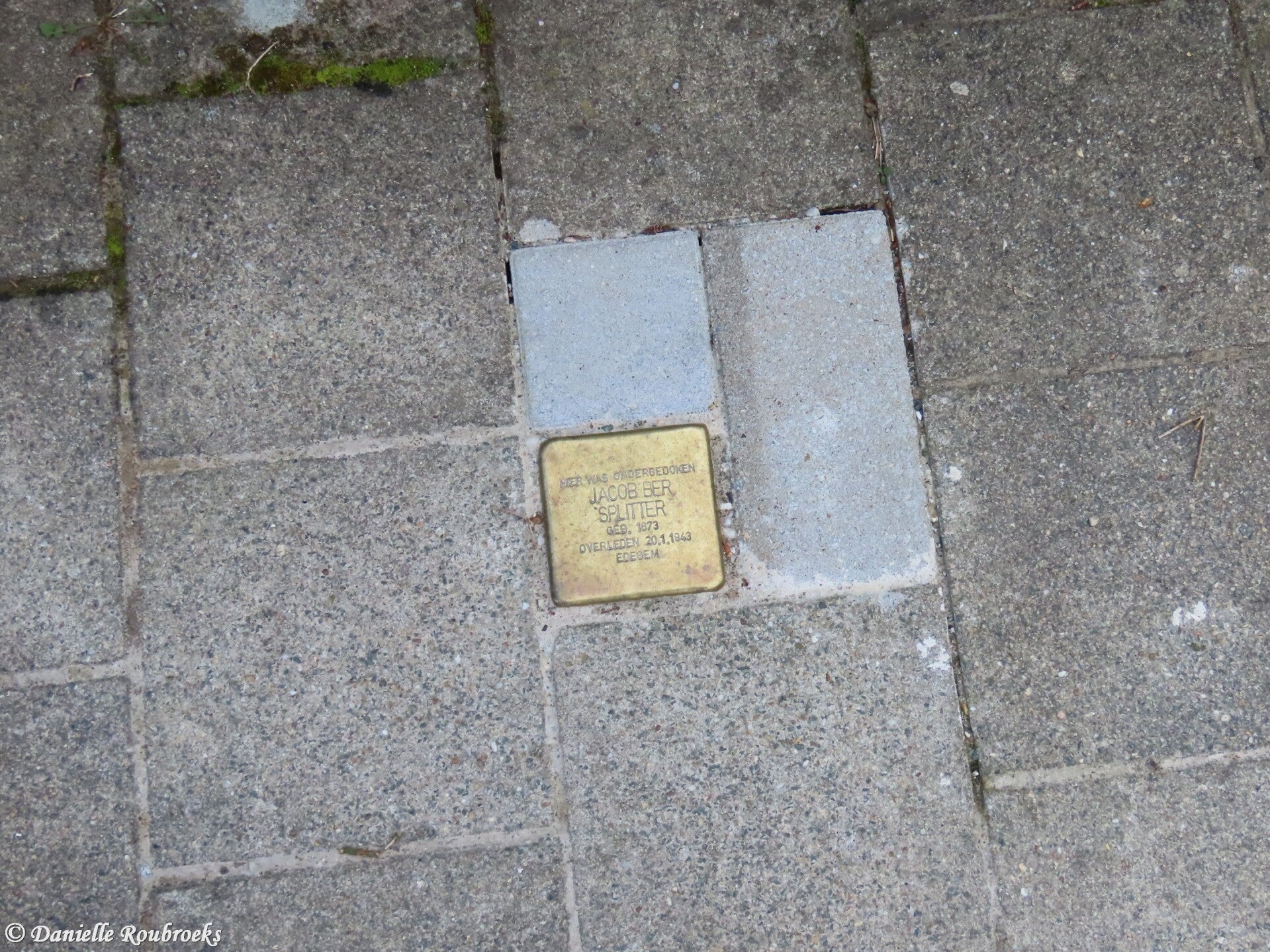
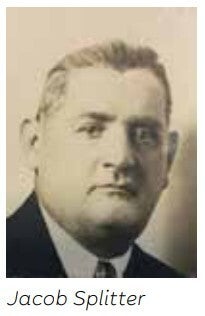
Jacob Ber Splitter was born on January 29, 1873, in Krakow (Poland) and held Austrian nationality. On June 20, 1898, Jacob married Lea Splitter in Krakow, and they had three children: Rubin, born in Krakow, and Otto and Jenny, born in Vienna. After a stay in The Hague, the family moved to Belgium in February 1929. Jacob Splitter was a white goods dealer. Between 1929 and 1942, they lived at various addresses in Antwerp.
Registered in the Jewish register and compulsorily affiliated with the Association of Jews in Belgium, the family decided to go into hiding in August 1942, when the raids in Antwerp began, initially staying for about three weeks with a couple in Deurne. From September 2, 1942, Jacob, together with his son Otto, daughter-in-law Dora Hirschberg, three-month-old granddaughter Hélène, daughter Jenny, Laura Hallman (widow of Chaim Hirschberg and mother of Dora), and Henriette (sister of Dora), went into hiding with the De Winne-Bogaert couple at Koning Albertlei 20 in Edegem. Jacob was a customer of Benoit De Winne's white goods business in Antwerp.
On January 20, 1943, Jacob Ber Splitter died of heart failure. He was initially buried in the front garden of Albertlei 20 but was exhumed after the liberation and transferred to Schoonselhof and later to Brussels. Eventually, his body was laid to rest permanently in the Jewish cemetery in Putte (the Netherlands). All six of his family members who were in hiding survived the war.
(Info: Guido Andries, NSB-Edegem)
Lentelei 33
hier verbleef
SOPHIE LEVY
geb. 1903
gearresteerd Jan 1943
gedeporteerd 19.4.1943
uit Kazerne Dossin
vermoord
Auschwitz
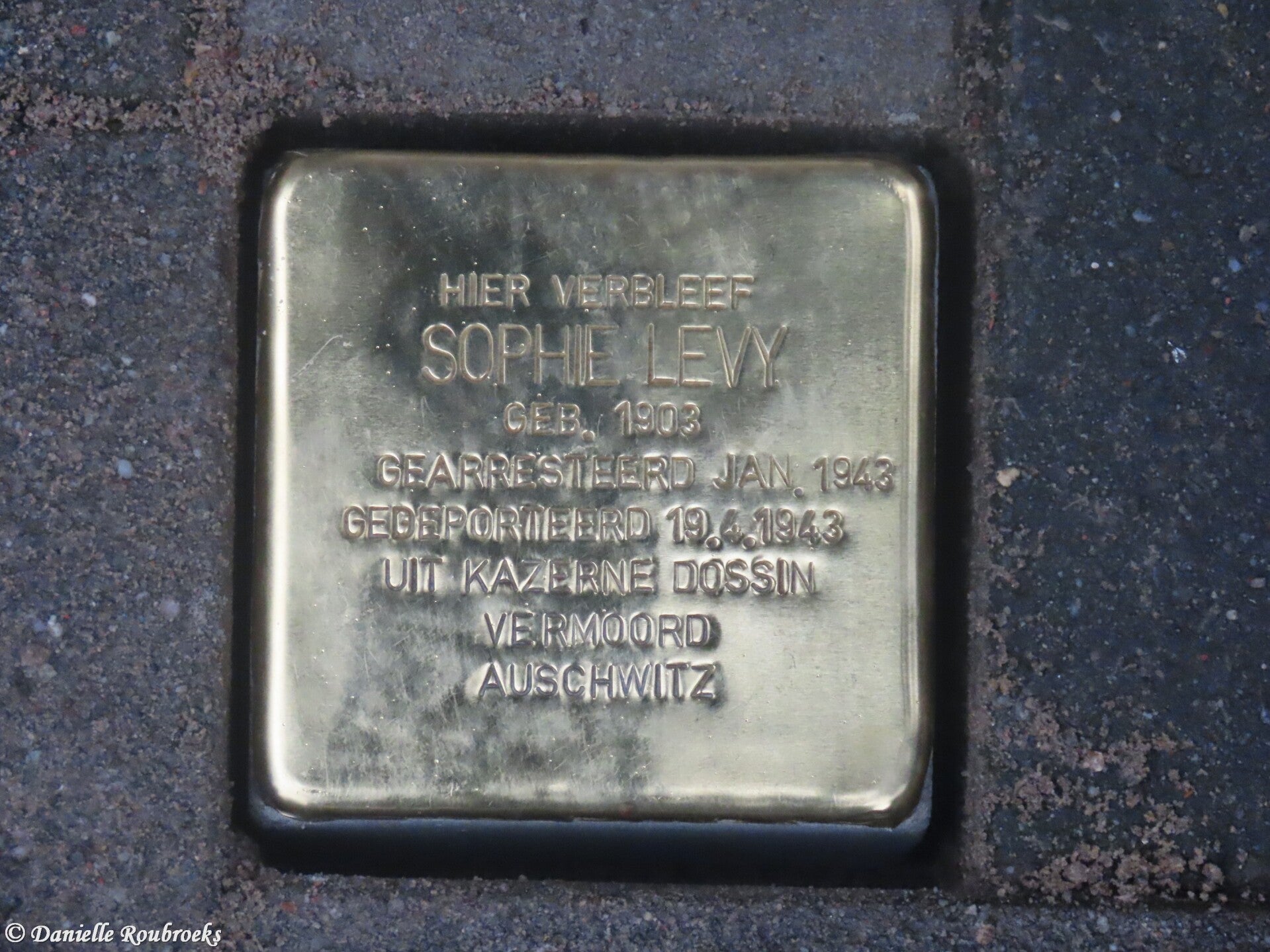
Lentelei 33
here resided
SOPHIE LEVY
born 1903
arrested Jan 1943
deported 19.4.1943
from Kazerne Dossin
murdered
Auschwitz
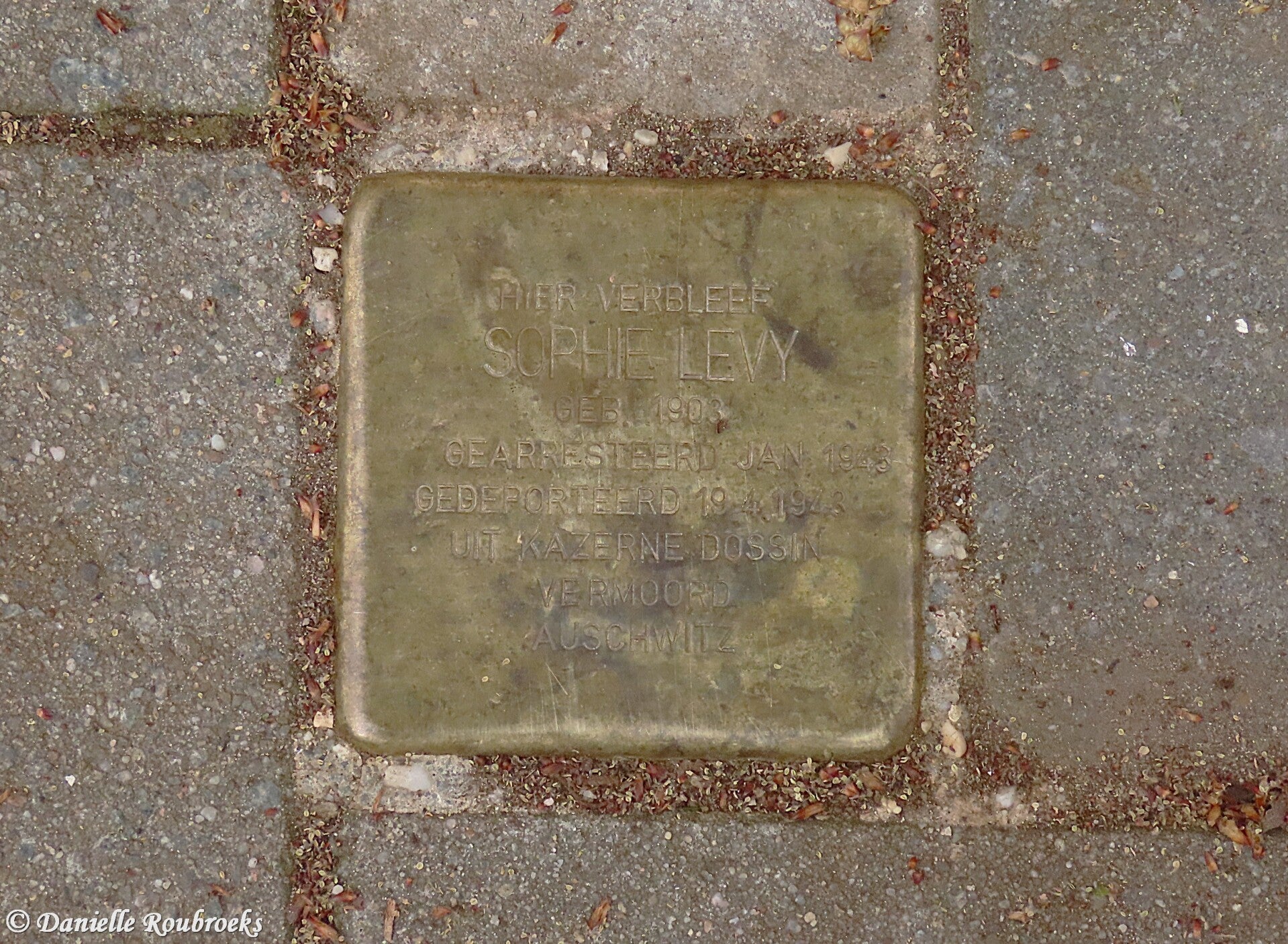
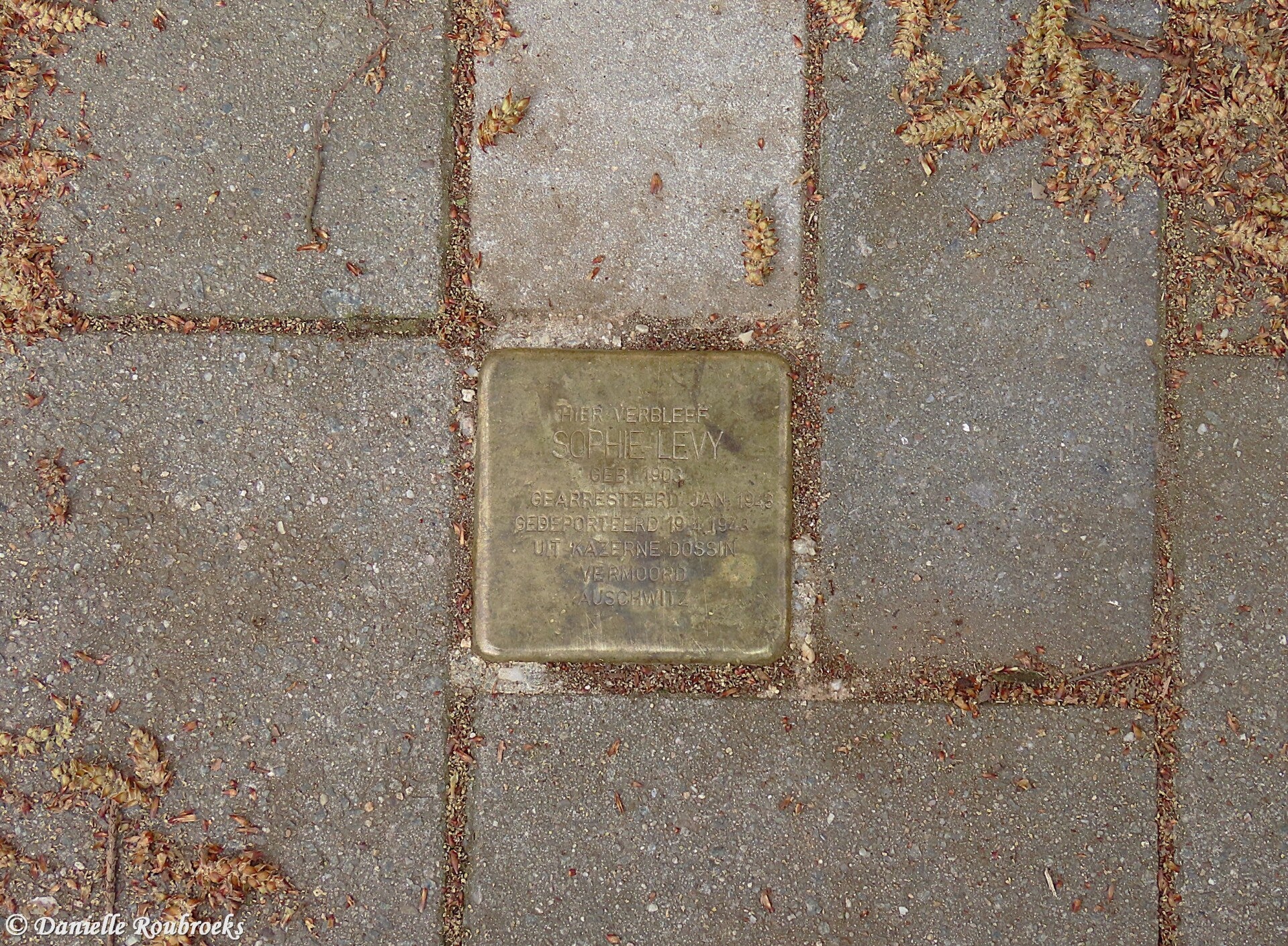

Sophie Levy, born on January 11, 1903, in Amsterdam, daughter of Daniel Levy and Sara Buitenkant. She was unmarried and worked as an office clerk. Before and after the First World War, she traveled regularly between Amsterdam and Antwerp. Coming from Borgerhout, she settled in Edegem on December 17, 1937, at Leopold III lei 32. On November 28, 1941, Sophie was officially removed from the Edegem population register; her new destination is unknown. On February 24, 1942, Sophie moved in with Joseph and Elisabeth De Vries-Levy, her brother-in-law and sister, residing at Lentelei 33 in Edegem.
The date and circumstances of her arrest are unknown, but on January 22, 1943, Sophie was registered at the Dossin Barracks and on April 19, 1943, deported with transport XX to Auschwitz, where she was murdered on an unknown date.
(Info: Guido Andries, NSB-Edegem)
Lentelei 35
hier was ondergedoken
SOPHIA
BREMER-BREMER
geb. 1919
gearresteerd 11.3.1943
gedeporteerd 19.4.1943
uit Kazerne Dossin
vermoord
Auschwitz

Lentelei 35
here was in hiding
SOPHIA
BREMER-BREMER
born 1919
arrested 11.3.1943
deported 19.4.1943
from Kazerne Dossin
murdered
Auschwitz
Lentelei 35
hier was ondergedoken
KARIN BIANCA
IRENE BREMER
geb. 6.1.1941
gearresteerd 12.3.1943
gedeporteerd 19.4.1943
uit Kazerne Dossin
vermoord
Auschwitz

Lentelei 35
here was in hiding
KARIN BIANCA
IRENE BREMER
born 6.1.1941
arrested 12.3.1943
deported 19.4.1943
from Kazerne Dossin
murdered
Auschwitz
Sophia Bremer, born in Amsterdam on June 27, 1919, daughter of Simon Bremer and Branca Koperenberg. On September 13, 1938, Sophia married her cousin Elias Bremer in Amsterdam (hence the double surname) and worked as a doctor's assistant in her husband's practice. On January 6, 1941, their daughter Karin Bianca Irène was born in Amsterdam.
Presumably in the course of 1942, the Bremer family fled to Belgium. Elias Bremer and Sophia's parents were deported from the Kazerne Dossin to Auschwitz on Transport VI and Transport VII respectively, where they perished.
Thanks to the network of Klaas and Julia Sluys-Schuyten, Reformed Protestants from Boechout, Sophia and Karin were able to go into hiding in October/November 1942 with Charles and Yvonne Hendrickx-Noë at Lentelei 35 in Edegem. On March 11, 1943, the Sicherheitspolizei-SD (SiPo-SD) raided the Hendrickx family's home. Sophia Bremer was arrested on the spot. Charles and Yvonne claimed that two-year-old Karin Bremer was their child, but the following day Karin was taken away anyway. Mother and daughter were transferred to the prison in Antwerp on March 12 and a week later to the Dossin Barracks in Mechelen. On April 19, Sophia and Karin were deported to Auschwitz on transport XX and murdered upon arrival.
(Info: Guido Andries, NSB-Edegem)
Lentelei 35
hier was ondergedoken
JONAS POLAK
geb. 12.1.1918
gearresteerd 11.3.1943
gedeporteerd 19.4.1943
uit Kazerne Dossin
ontsnapt Transport XX
ondergedoken
bevrijd
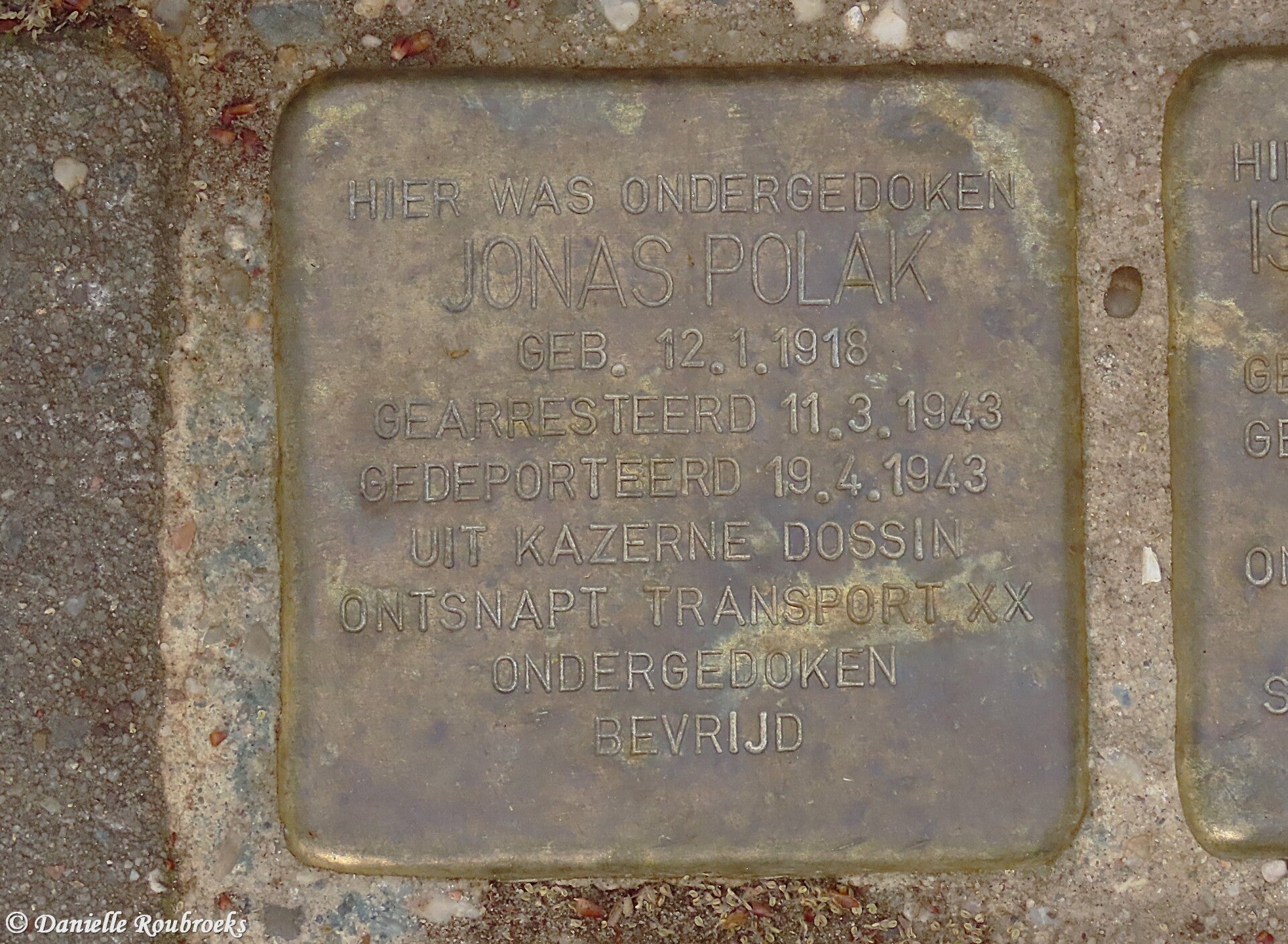
Lentelei 35
here was in hiding
JONAS POLAK
born 12.1.1918
arrested 11.3.1943
deported 19.4.1943
from Kazerne Dossin
escaped Transport XX
in hiding
liberated
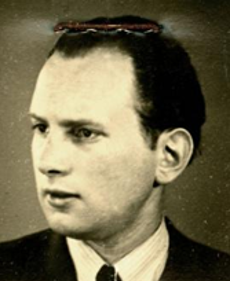
Jonas Polak was born on January 12, 1918, in Amsterdam and held Dutch nationality. Jonas was active as a merchant and manager in the textile industry. Since 1935, he lived in Sint-Joost-ten-Node and worked as a trader for the Stiel-Rothschild firm. However, having been removed from the register of foreign nationals, he returned to the Netherlands in 1936.
In July 1942, he returned to Belgium and went into hiding there. His parents had already been deported in the meantime. In October/November 1942, Jonas Polak went into hiding with Charles and Yvonne Hendrickx-Noë, who provided shelter to three other Jewish refugees at Lentelei 35 in Edegem. On March 11, 1943, the people in hiding were arrested. Along with the other arrested individuals, Jonas Polak was transferred to the Kazerne Dossin in Mechelen and placed on Transport XX bound for Auschwitz on April 19, 1943. Partly due to an action by three young resistance fighters, who brought the train to a halt between Boortmeerbeek and Haacht, 236 deportees were able to escape from the train along the entire route. 118 of them remained out of the hands of the Germans, including Jonas Polak, who escaped near Tienen. He went into hiding again and survived the war.
After the liberation, Jonas Polak stayed in Ixelles. On March 19, 1946, he married Colette Oostvogels in Ixelles; she was born on November 11, 1923, in Antwerp. At the end of 1946, they moved to Schaerbeek, where he founded a company, based in Amsterdam, for the import and trade of textiles. His wife stayed at their official address in Bloemendaal (NL). In 1948, he also emigrated to the Netherlands.
(Info: Guido Andries, NSB-Edegem)
Lentelei 35
hier was ondergedoken
ISRAEL ‚IGO’ GROSS
geb. 4.4.1897
gearresteerd 11.3.1943
gedeporteerd 19.4.1943
uit Kazerne Dossin
ontsnapt Transport XX
ondergedoken
Sint-Joost-ten-Node
bevrijd
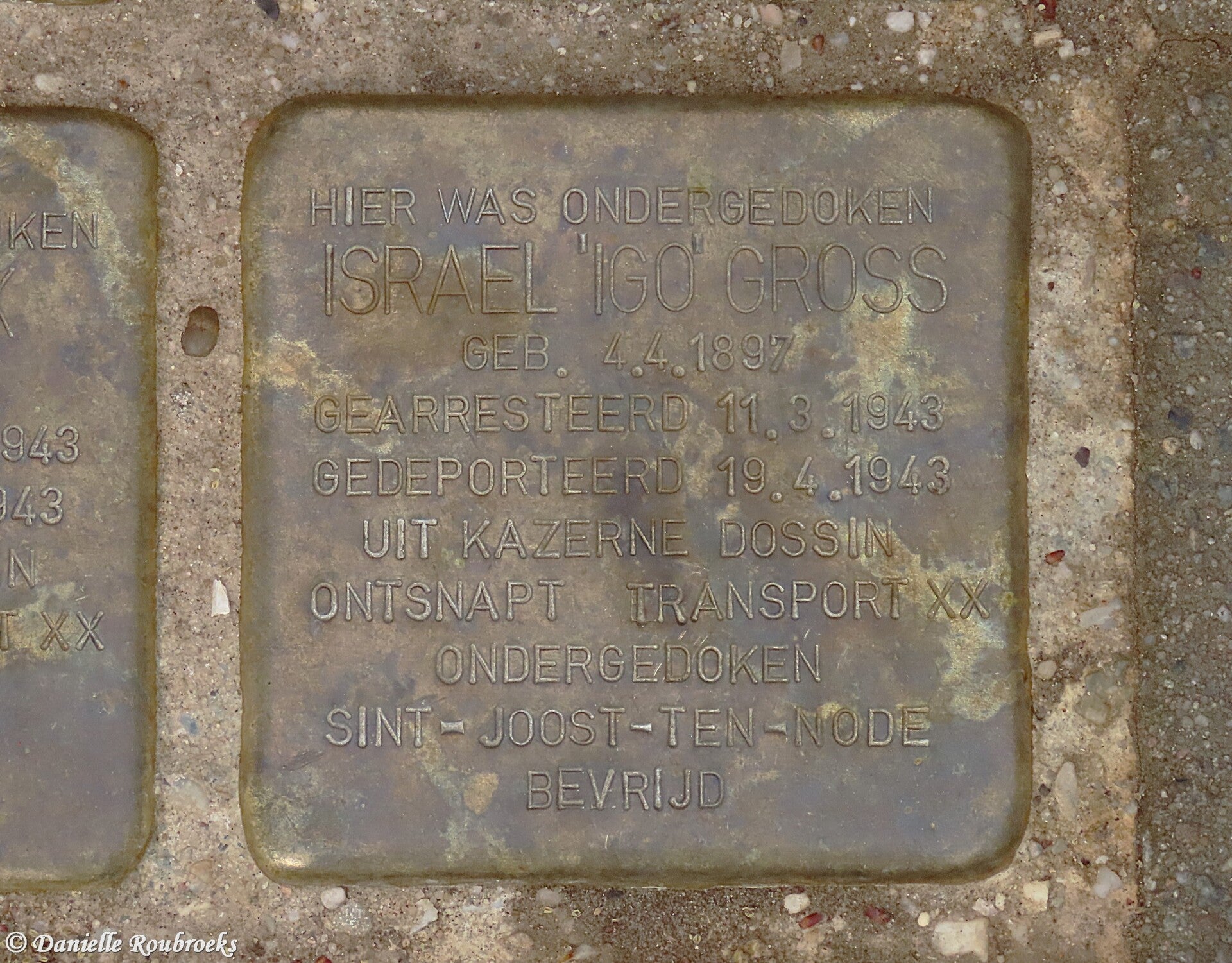
Lentelei 35
here was in hiding
ISRAEL ‚IGO’ GROSS
born 4.4.1897
arrested 11.3.1943
deported 19.4.1943
from Kazerne Dossin
escaped Transport XX
in hiding
Sint-Joost-ten-Node
liberated
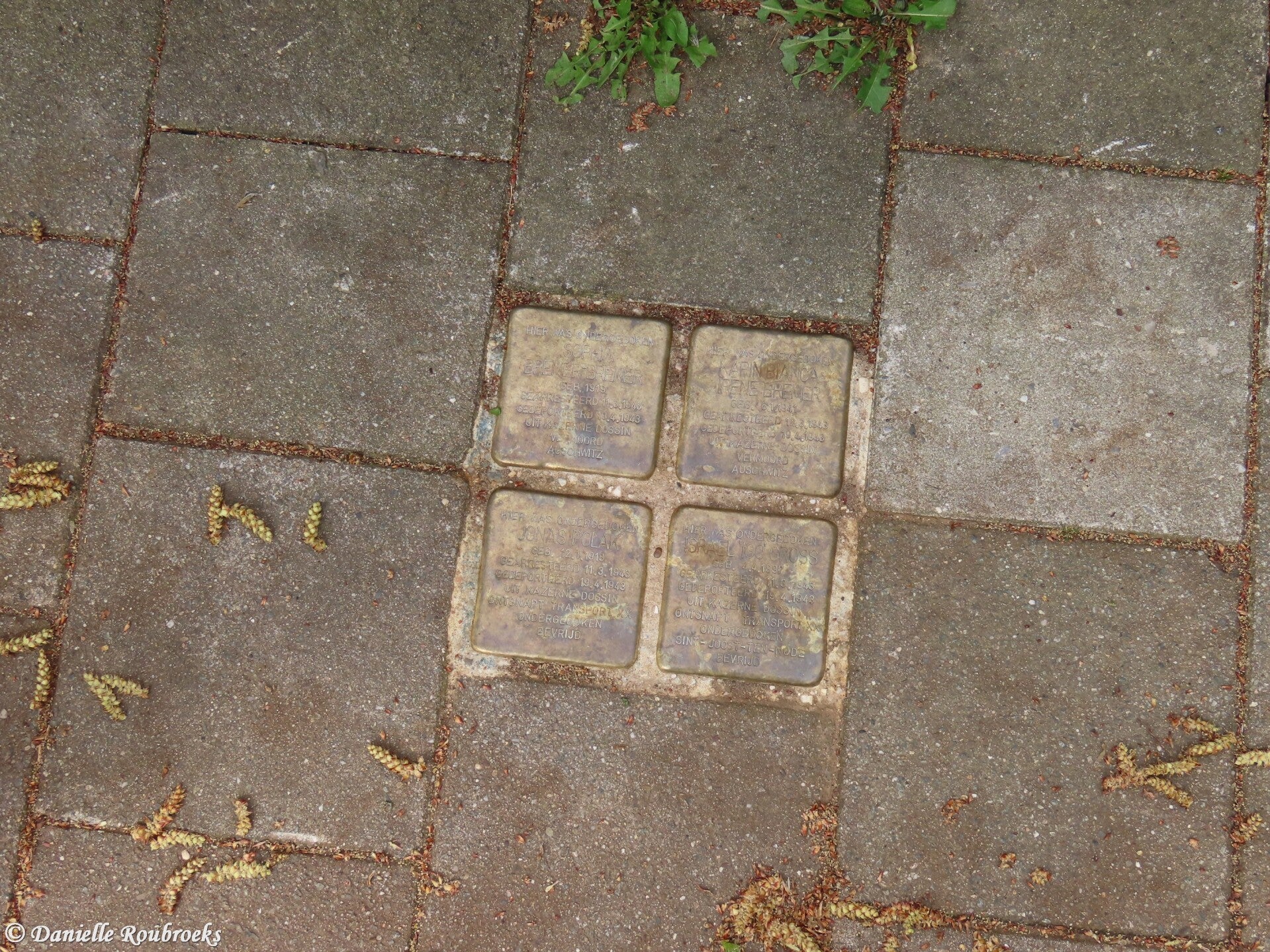
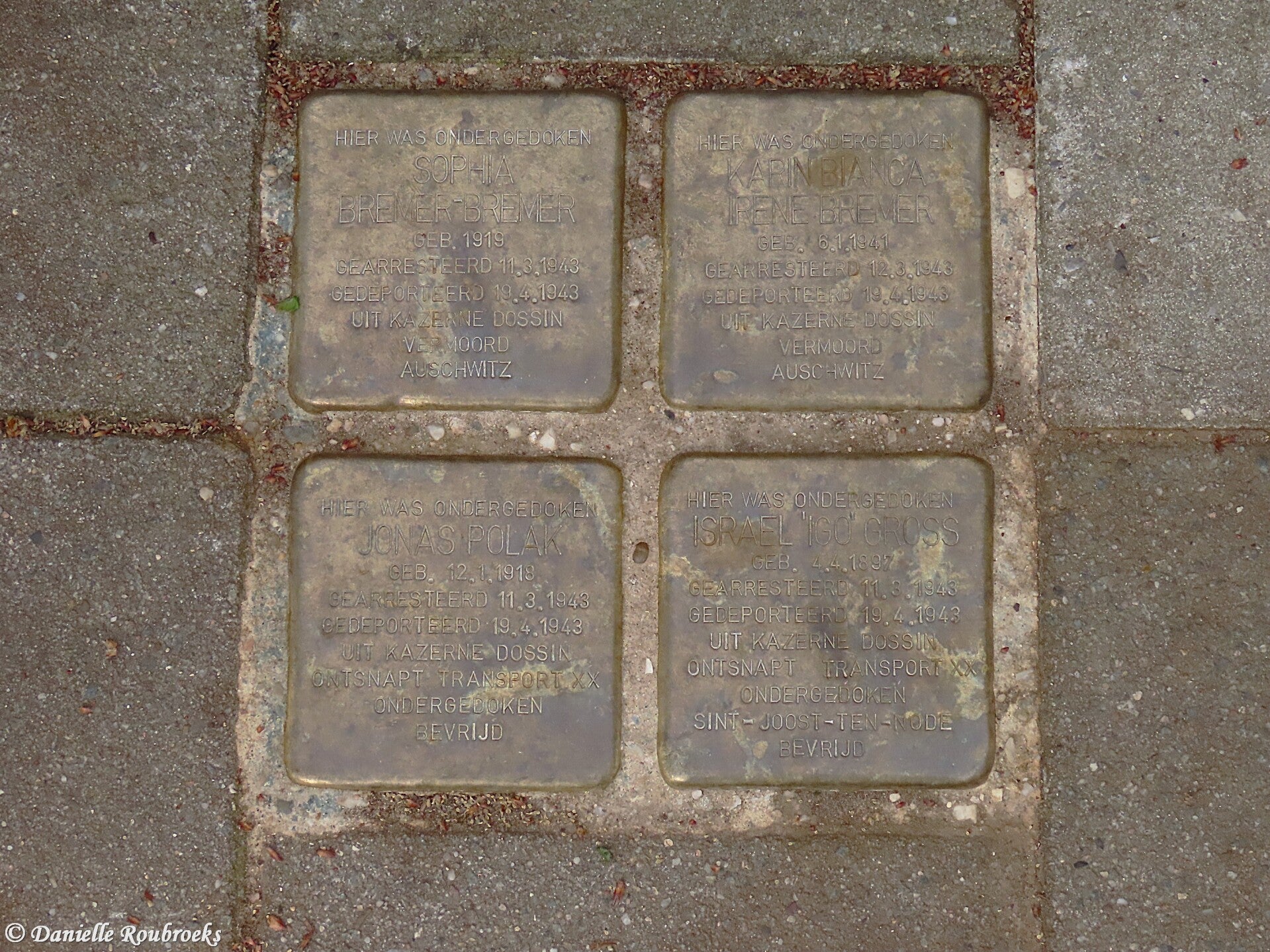
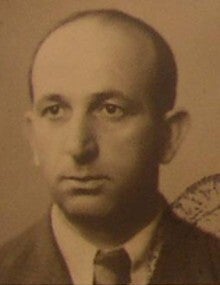
Israel “Igo” Gross was born on April 4, 1897, in Nadworna, Poland, now Ukraine. Igo was a furrier and tailor by profession and married to Rosalie Berlstein. Having fled from Vienna, the couple settled in Antwerp in August 1938. Probably due to their German-Austrian nationality, they were interned in the Saint-Cyprien camp in France in May 1940, but they were able to return to Antwerp in November 1940. Later, they moved to Schaerbeek, where Israel Gross worked as a furrier for the firm Lustra, which made rabbit fur-lined winter coats for Wehrmacht soldiers on the Eastern Front.
In October 1942, Rosalie Berlstein, along with other Jewish refugees, went into hiding with Charles and Yvonne Hendrickx-Noë at Lentelei 35 in Edegem. Her husband joined her in March 1943. On March 11, 1943, Israel Gross was arrested there along with Sophia Bremer and Jonas Polak. His wife miraculously managed to escape. Together with the other arrested people in hiding, Israel Gross was transferred to the Kazerne Dossin in Mechelen and placed on Transport XX bound for Auschwitz on April 19, 1943.
Thanks in part to an action by three young resistance fighters, who brought the train to a halt between Boortmeerbeek and Haacht, 236 deportees were able to escape from the train along the entire route. 118 of them remained out of the hands of the Germans, including Israel Gross, who escaped near Tienen. He joined his wife, who was in hiding in Sint-Joost-ten-Node. Together, they survived the war. In 1949, the Gross-Berlstein couple emigrated to the US (New York).
(Info: Guido Andries, NSB-Edegem)
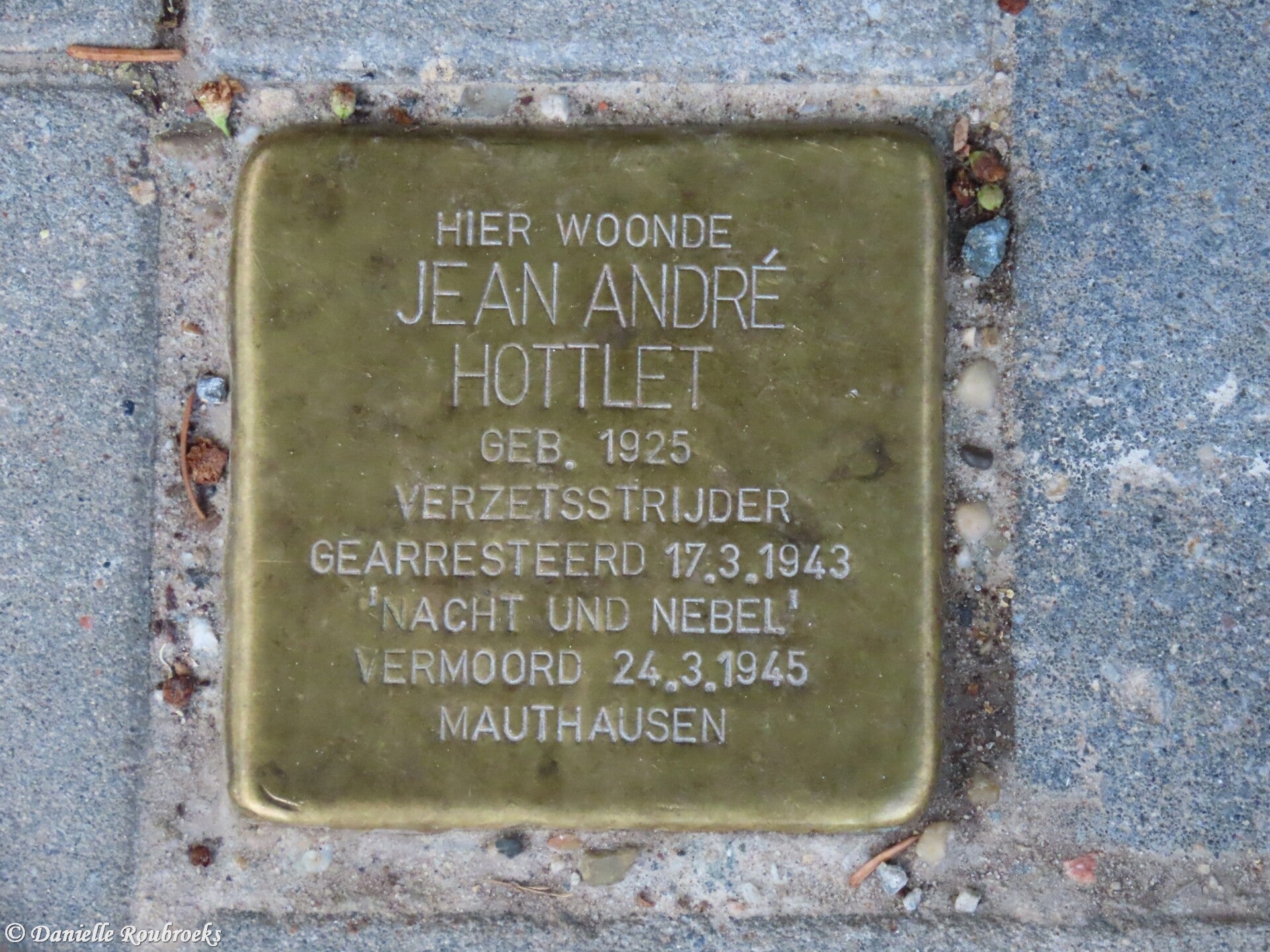
Mechelsesteenweg 424
hier woonde
JEAN ANDRE
HOTTLET
geb. 1925
verzetsstrijder
gearresteerd 17.3.1943
‘Nacht und Nebel’
vermoord 24.3.1945
Mauthausen
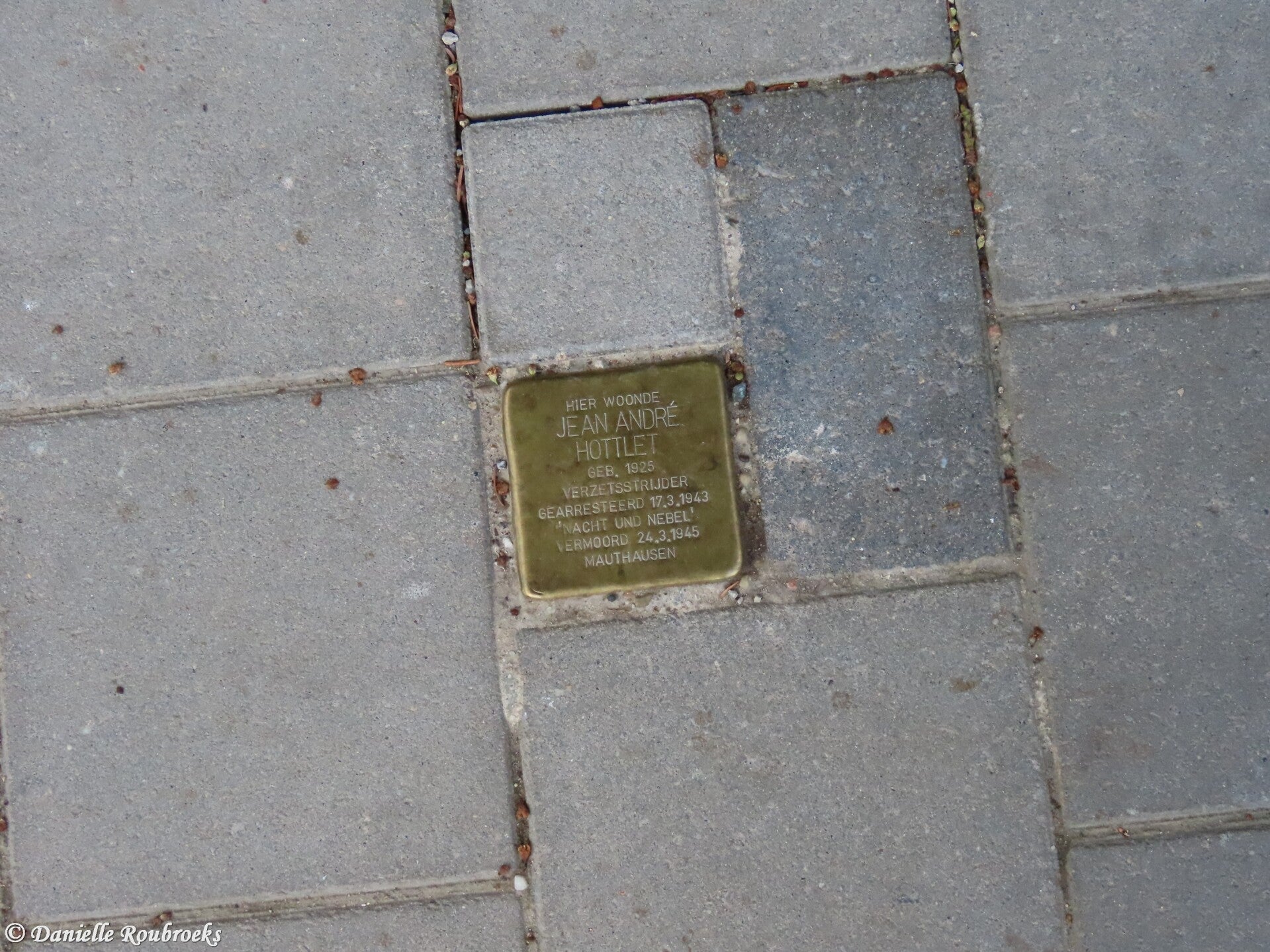
Mechelsesteenweg 424
here lived
JEAN ANDRE
HOTTLET
born 1925
resistance fighter
arrested 17.3.1943
‘Nacht und Nebel’
murdered 24.3.1945
Mauthausen


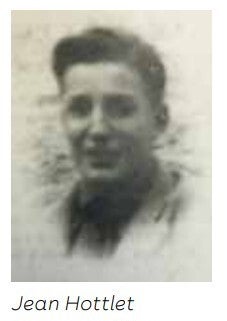
Jean André “Andries” Hottlet was born on June 20, 1925, in Antwerp, son of André Hottlet and Marie Borget. He was the second oldest of seven children, five sons and two daughters. The family lived at Mechelsesteenweg 430, now house number 424, in Edegem, since September 26, 1933.
He was a student, a member of a local scout group, and according to a witness, he allegedly joined the Secret Army, although there is no formal confirmation of this. On March 17, 1943, Jean, along with his fellow scout Louis Scheid, was arrested by the Secret Field Police during a sabotage operation at Hemiksem airfield, where they stole cables. German dummy aircraft were stationed at this airfield to mislead the Allies. On March 26, 1943, he was handed over to the Feldkommandantur (FK) 520, and on April 19 to the Feldgericht Luftgau Brussels, which ordered his deportation for the remainder of the war.
Jean ended up in the "Nacht und Nebel" concept. Sentenced to one and a half years in prison, he went through a long series of prisons and penal camps, including Cologne, Bochum, Esterwegen, Papenburg, Hanover, Leipzig, Plannen, Ezer, Prague, Vienna, and Graz. On March 9, 1945, Jean arrived at the Mauthausen concentration camp, where he died two weeks later, on March 24, 1945, and was cremated. Father Hottlet received confirmation of his son's death on July 12, 1945.
(Info: Guido Andries, NSB-Edegem)